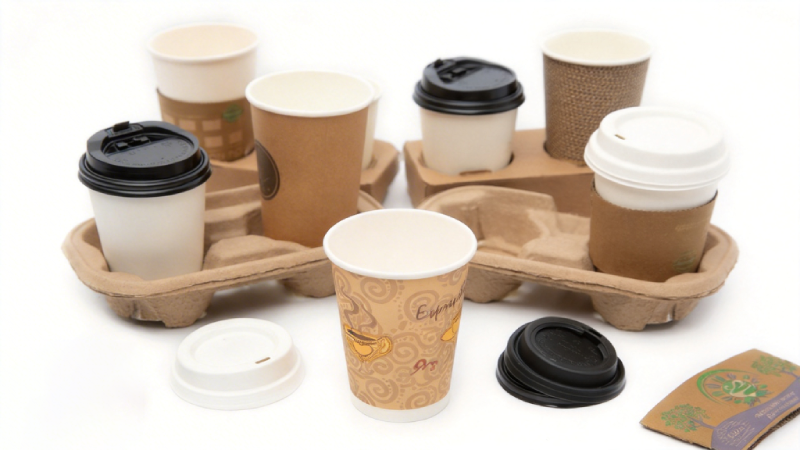
When people talk about coffee shop packaging, they usually mean cups.
But in real orders, cups are only one part of the setup.
What we see every day is a combination:
cups, sleeves, carriers, and bags—all used together within a few seconds during peak hours.
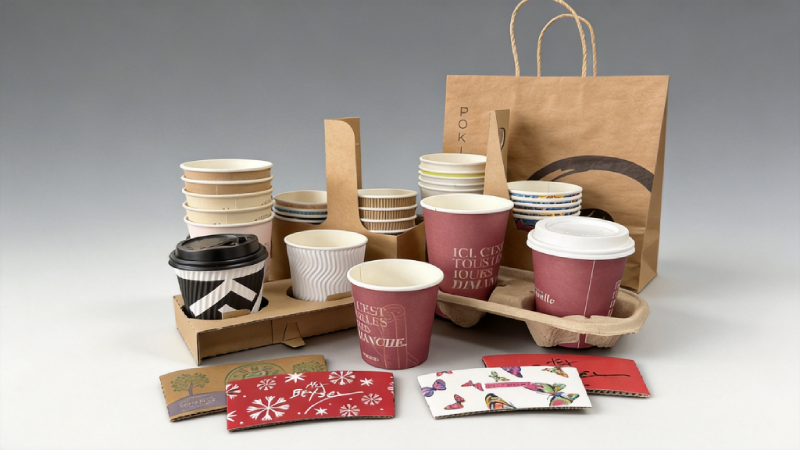
Paper Cups: The Starting Point of Every Order
Every coffee starts here.
But the type of cup you choose already defines how the rest of the packaging needs to work.
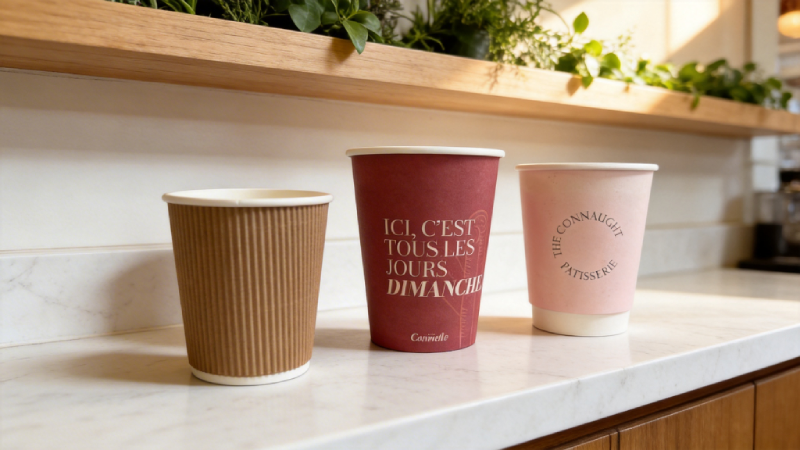
In daily use, we mainly see three structures:
- Single wall → simple, but needs a sleeve
- Double wall → cleaner look, better insulation
- Ripple wall → stronger grip, especially for hot drinks
Most takeaway-focused coffee shops don’t stay with single wall for long.
Not because it doesn’t work—but because they want something more stable and consistent.
Cup Sleeves: Where Comfort Comes In
Once the drink is hot enough, sleeves become part of the default setup.
They don’t change the product.
They change how people hold it.
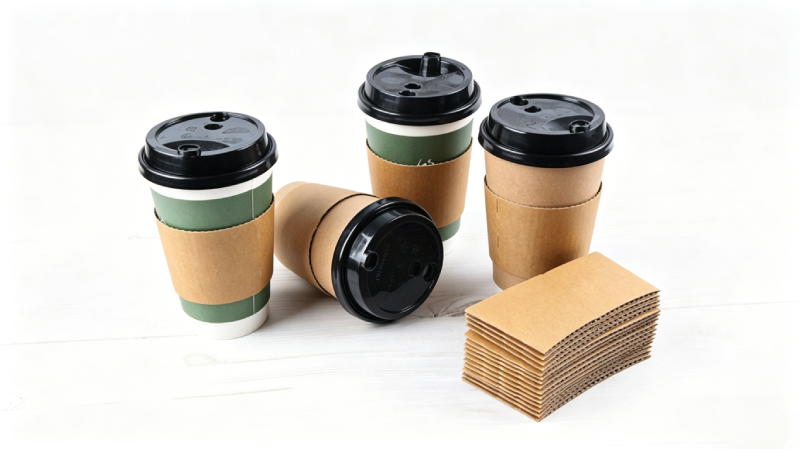
Corrugated sleeves are more commonly used in takeaway.
They feel better in hand, especially during busy hours when customers grab and go.
Cup Carriers: What Happens When Orders Get Bigger
Single cup orders are straightforward.
But once someone orders two, three, or four drinks, the focus shifts completely.
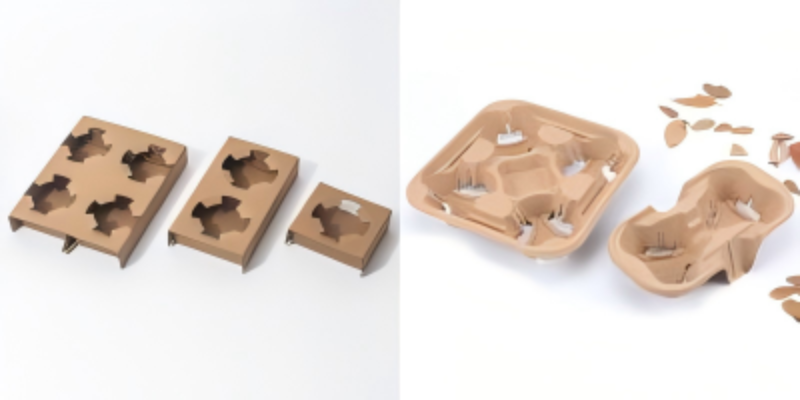
There are two main options:
- Corrugated cup carriers (foldable, space-saving)
- Molded pulp carriers (stronger, more stable)
Both are widely used.
The choice usually depends on how the drinks are handed over—counter pickup or delivery.
Paper Bags: Bringing Everything Together
At the end of the process, everything goes into one place.
That’s where paper bags come in.
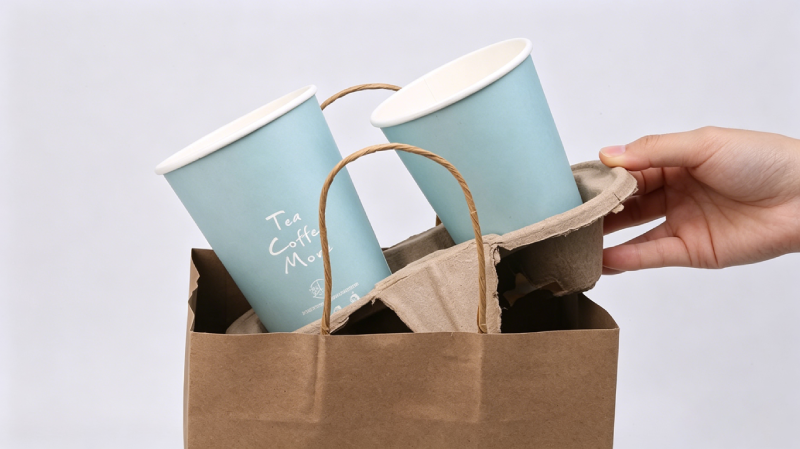
For coffee shops, bags are less about presentation and more about reliability.
- The handle needs to feel secure
- The paper needs to hold its shape
- The bag should not collapse when carrying multiple items
This is something customers don’t talk about—but they definitely notice.
How These Products Work Together in Real Use
From our side, we don’t look at these as separate items.
We look at how they move together in a real order:
- a hot cup picked up quickly
- a sleeve added without slowing down service
- multiple drinks placed into a carrier
- everything packed into a bag within seconds
That flow is what defines whether the packaging works or not.
When it’s smooth, no one notices.
When it’s not, it shows up immediately in handling, balance, or overall experience.
What We Usually Suggest to Coffee Shop Buyers
We’ve worked with different types of buyers—from small coffee brands to larger chains.
The approach that works best is usually simple:
- Start from your real order scenario, not just product specs
- Choose cup structure first, then match sleeves
- Decide carriers based on order size and usage
- Make sure bags support the full setup
And most importantly—test them together.
Because that’s how your customers will actually use them.
Conclusion
Coffee packaging is not about one product.
It’s about how everything works together during real service.