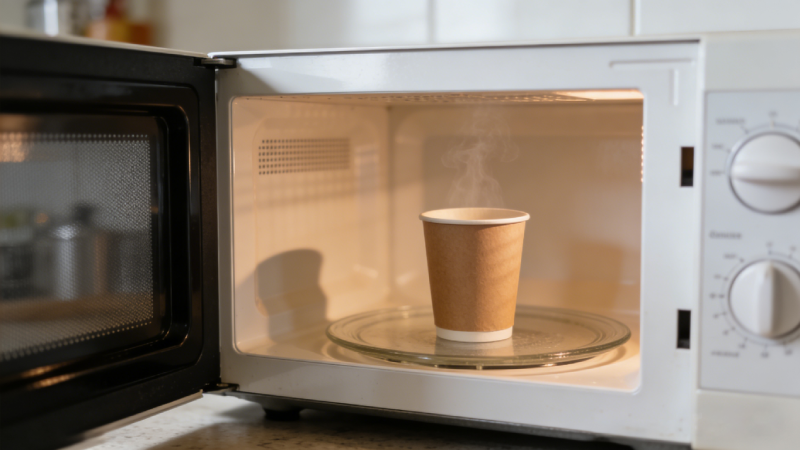
As a manufacturer of disposable paper cups with a full production line in China, I get this question more often than you might think:
“Are your paper cups microwave safe?”
It sounds simple.
But the answer requires technical clarity.
Many distributors, wholesalers, and foodservice brands assume that if a cup can hold hot coffee, it can also survive microwave reheating.
That assumption is incorrect.
And if you are importing paper cups under your own brand, misunderstanding this difference can create customer complaints, safety risks, and even liability exposure.
Short answer: Standard paper cups are designed for hot liquid containment — not for microwave reheating. These are fundamentally different thermal conditions.
What Actually Happens Inside a Microwave?
Microwaves do not heat materials the same way conventional heat does.
They excite water molecules directly.
The liquid inside the cup heats first.
The cup structure heats unevenly and indirectly.
This creates internal steam pressure and localized stress points.
In our production specifications, most hot cups are engineered for liquid temperatures between 85–95°C under static conditions.
Microwave reheating can create hot spots that exceed that range in seconds.
According to industry summaries such as the Microwave Heating Behavior Report, uneven thermal distribution is one of the primary failure causes in paper-based food packaging.
What that means in practice:
- Bottom seam softening
- Sidewall deformation
- Coating separation
Are Any Paper Cups Microwave Safe?
Unless specifically labeled and certified, the answer is no.
There are different cup constructions:
- Single wall paper cups
- Double wall paper cups
- Ripple wall paper cups
Each type is engineered for a defined application.
None of these standard constructions are developed for microwave radiation exposure unless explicitly tested and certified for that purpose.
Data referenced in the Disposable Packaging Heat Resistance Index shows that most PE-lined paper cups experience structural degradation under microwave cycling.
Holding heat and generating heat internally are not the same thing.
The PE Coating Problem
Most hot cups use polyethylene (PE) coating.
PE is a thermoplastic material.
It softens when temperature rises.
Under normal beverage service, this is controlled and stable.
Under microwave exposure, heat distribution becomes irregular.
The coating may:
- Bubble
- Delaminate from paperboard
- Lose adhesion strength
Once that happens, moisture penetrates the fiber layer.
Structural stiffness decreases quickly.
What About PLA or Compostable Cups?
Compostable cups often use PLA lining.
PLA has lower heat tolerance compared to PE.
Its softening temperature is typically around 55–60°C.
Microwave reheating easily exceeds this range.
Studies summarized in the Biopolymer Thermal Stability Overview indicate faster deformation under rapid heating cycles.
For importers focusing on compostable product lines, this is especially important.
PLA cups are designed for sustainability performance — not microwave resistance.
Adhesives and Printing Layers Under Microwave Stress
Another overlooked factor is adhesive performance.
In cup manufacturing, adhesives are used for:
- Side seam bonding
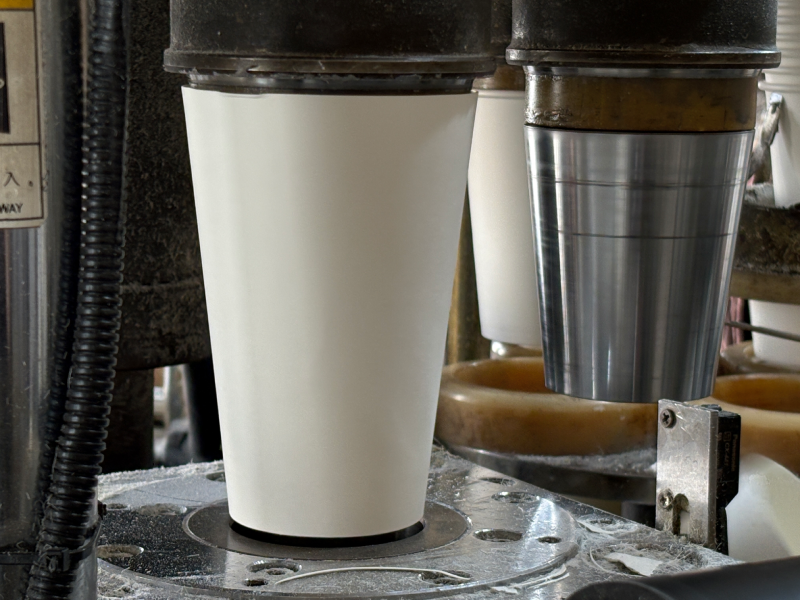
- Bottom disc sealing
- Outer layer attachment (double wall or ripple wall)
These adhesives are food-grade and safe under standard beverage conditions.
However, microwave exposure introduces rapid thermal change.
Localized overheating may weaken bonding areas.
According to the Food Contact Adhesive Migration Study, extreme heat conditions can increase migration risks in certain packaging systems.
For brand owners importing private-label cups, understanding this distinction is part of risk management.
Structural Integrity and Steam Pressure
Paperboard strength depends on fiber integrity and moisture balance.
Microwaving changes both.
Steam forms inside the wall structure.
Fibers absorb moisture and expand.
Stiffness drops.
We test cups for:
- Vertical compression strength
- Wet strength retention
- Bottom seam integrity
But these tests are based on beverage containment scenarios.
Microwave reheating introduces internal pressure that cups are not engineered to withstand.
The Fire Risk — Rare But Real
Most failures involve deformation or leakage.
But there is a more serious scenario.
If a paper cup is microwaved empty, there is no liquid to absorb energy.
Microwave energy accumulates.
Paper is cellulose.
Cellulose ignites at high temperatures.
The Microwave Combustion Incidents Review documents minor ignition cases involving empty paper products.
For distributors and importers, this becomes a labeling and instruction issue.
Clear usage instructions reduce liability exposure.
What Responsible Importers Should Do
If you are sourcing paper cups for resale or branding:
- Do not assume microwave safety.
- Confirm material structure with your supplier.
- Add clear “Do Not Microwave” labeling unless certified.
- If microwave compatibility is required, source containers specifically tested for that use.
Microwave-safe certification is a separate testing category.
Standard disposable cup testing protocols do not cover microwave radiation exposure.
That distinction protects your brand.
Conclusion
Paper cups are engineered for serving hot beverages.
They are not engineered for microwave reheating.
The materials, coatings, adhesives, and structure are optimized for containment — not internal energy generation.
If reheating is required, transferring to a microwave-safe container is the correct solution.
For importers and brand owners, clarity prevents complaints.
And prevention always costs less than damage control.
Looking for a Reliable Paper Food Packaging Manufacturer?
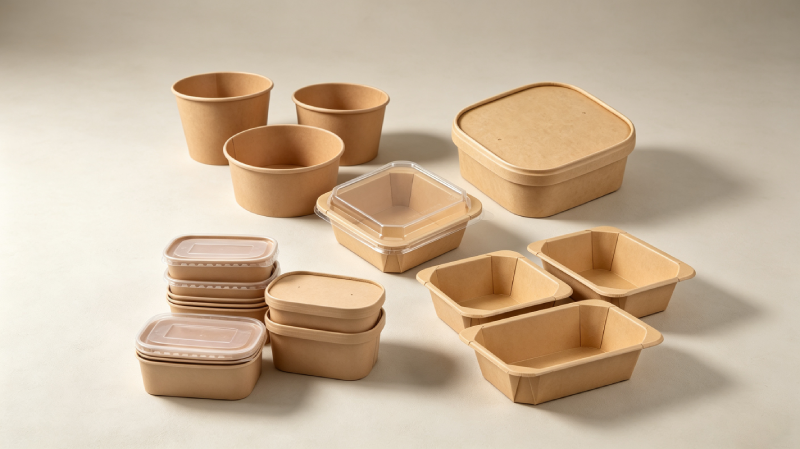
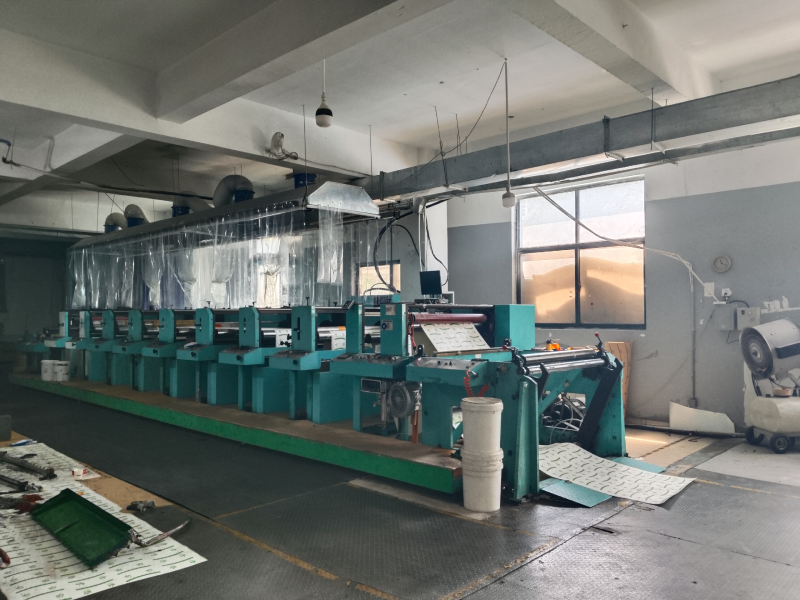
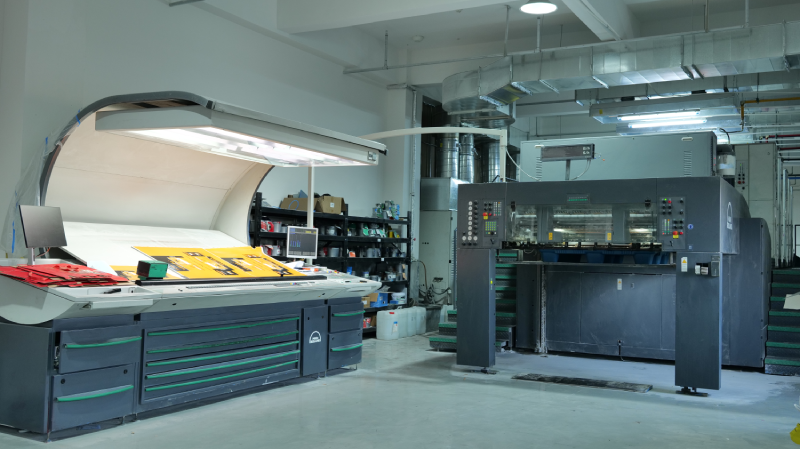
We manufacture high-quality disposable paper cup and food packaging, including paper cups, paper bowls, takeaway boxes, food containers, and paper bags.As a factory with a full production line, we support wholesale custom printing for bulk paper packaging orders.
→ Explore Our Custom Paper Packaging Solutions
→ Contact Us for Samples, Specifications & OEM Support
Let our team help you choose the right paper packaging solution for your product, market, and logistics requirements.