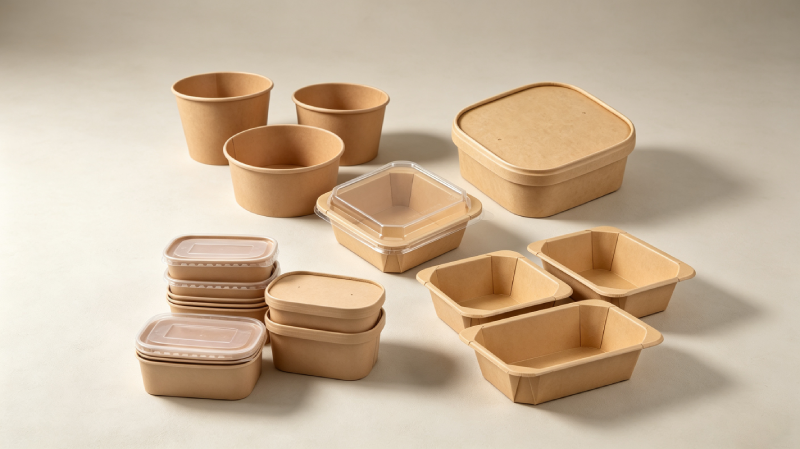
When people think about takeaway packaging, paper bowls often receive less attention than paper cups or paper bags.
Yet for many restaurants, food delivery brands, supermarkets, and distributors, disposable paper bowls have quietly become one of the most important packaging products.
They’re used for rice bowls, noodles, salads, soups, curries, poke bowls, pasta, desserts, and hundreds of other takeaway meals.
Over the past few years, we’ve also noticed another trend.
Buyers are no longer searching for a single paper bowl.
Instead, they’re looking for a packaging partner who can provide different bowl styles, matching lids, consistent printing, and reliable production across multiple product categories.
This guide explains the most common types of disposable paper bowls, the materials used to manufacture them, available customization options, and the production process behind every finished bowl.
Whether you’re sourcing for a restaurant chain, food distributor, or packaging importer, understanding these details makes supplier comparisons much easier.
Types of Disposable Paper Bowls
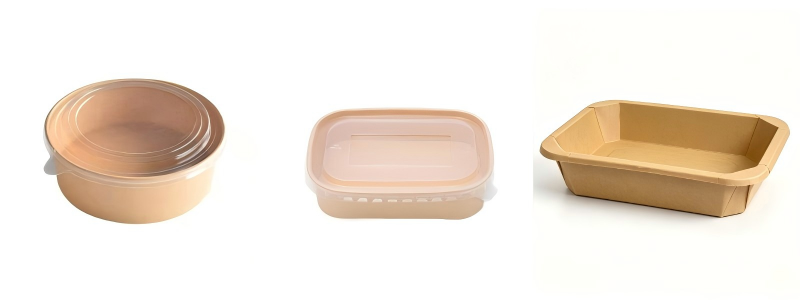
Round Paper Bowls
Round paper bowls remain the most widely used option.
Their smooth shape makes them suitable for soups, noodles, rice dishes, salads, frozen desserts, and hot meals.
Most are available with paper lids, PP lids, or transparent PET lids, making them suitable for both dine-in and takeaway applications.
Square Paper Bowls
Square paper bowls have become increasingly popular among restaurants and food delivery brands.
Compared with round bowls, they stack more efficiently, maximize packing space, and create a cleaner presentation for takeaway meals.
They are commonly used for:
- Rice bowls
- Chicken meals
- Pasta
- Salad
- Meal prep
Many buyers also choose square bowls because they fit neatly into delivery bags and improve presentation when customers open the package.
Octagonal Paper Bowls
Octagonal bowls combine practicality with appearance.
The wider opening provides better food presentation while maintaining good stacking performance.
They’re frequently selected for premium takeaway brands, poke bowls, healthy meals, and gourmet salads where visual presentation matters.
Lid Options for Disposable Paper Bowls
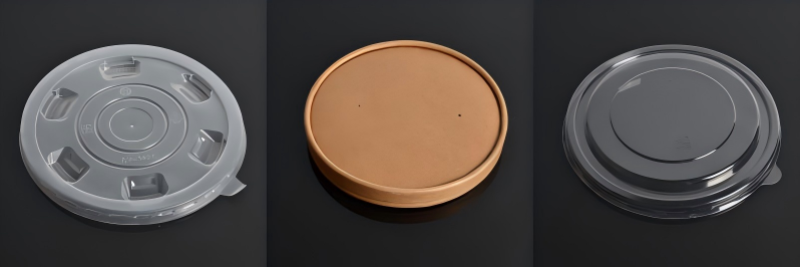
The bowl is only one part of the packaging system.
The lid often determines how well the packaging performs during transport.
| Lid Type | Best For | Main Advantages |
|---|---|---|
| Paper Lid | Hot meals | Sustainable appearance, stackable |
| PP Lid | Microwave applications | Heat resistant, durable |
| PET Lid | Salads, cold food, desserts | Excellent product visibility |
Many restaurant chains now prefer transparent PET lids because customers can immediately see the food inside without opening the package.
For delivery-focused businesses, secure lid compatibility is often more important than the bowl itself.
Materials Used for Disposable Paper Bowls
Although paper bowls may look similar, the materials behind them vary considerably.
Choosing the correct paper structure depends on the food application rather than appearance alone.
Kraft Paper
Kraft paper provides a natural appearance and has become one of the most popular choices for takeaway packaging.
It works well for restaurants that want a simple, eco-friendly presentation.
White Paperboard
White paperboard offers a smooth surface with excellent print quality.
It’s widely used for custom branded takeaway packaging because logos and graphics appear brighter and more consistent.
PE Coating
PE coating creates a moisture barrier that helps prevent leaks when packaging soups, noodles, curries, or other hot foods.
PLA Coating
Some markets require PLA-coated paper bowls as part of compostable packaging programs.
Availability depends on regional regulations and customer requirements.
How Disposable Paper Bowls Are Manufactured
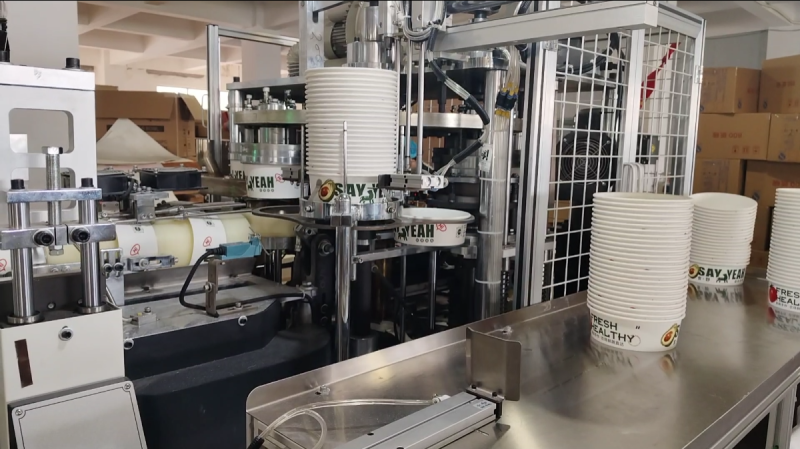
From the outside, a paper bowl appears to be a simple product.
The manufacturing process, however, involves several precision-controlled steps that directly influence strength, leak resistance, and printing quality.
A typical production process includes:
Food-grade paper selection
Paperboard is selected according to the required bowl size, food application, and coating specifications.
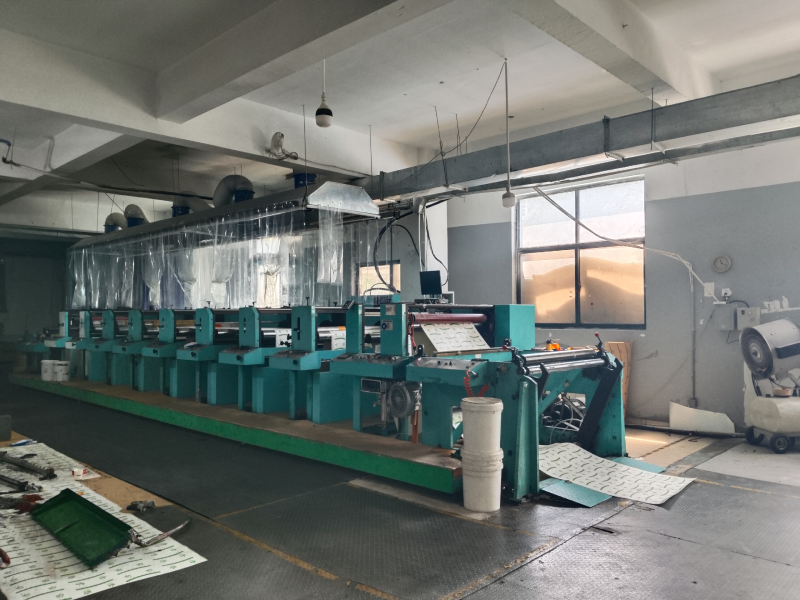
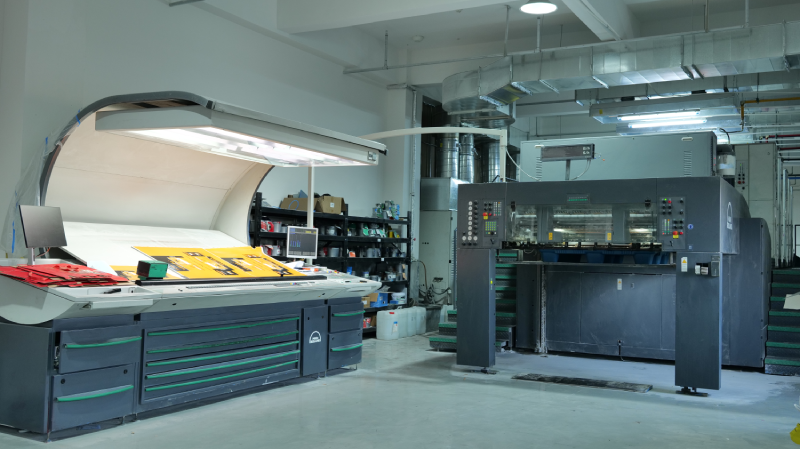
Printing
If custom branding is required, logos and artwork are printed before forming.
Color consistency is carefully monitored throughout production.
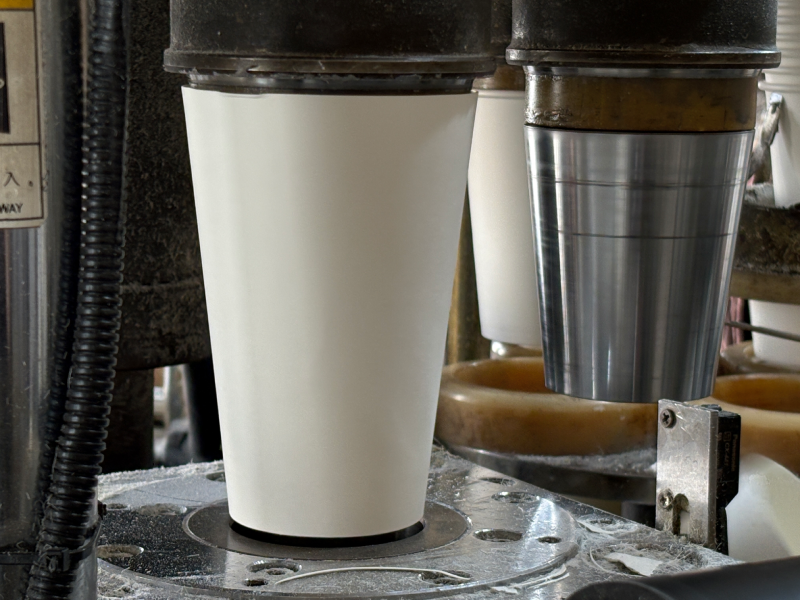
Die Cutting
Printed sheets are cut into precise blanks that will later become the bowl body.
Bowl Forming & Side Sealing
The paper blank is formed into shape and heat-sealed to create a strong side wall.
Machine precision is essential to maintain consistent dimensions.
PE / PLA Coating Inspection
The barrier coating is inspected to ensure reliable resistance against moisture, oil, and hot foods.
Leak Testing
Random production samples are filled with water or tested under pressure to verify sealing performance before packing.
Custom Printing Considerations
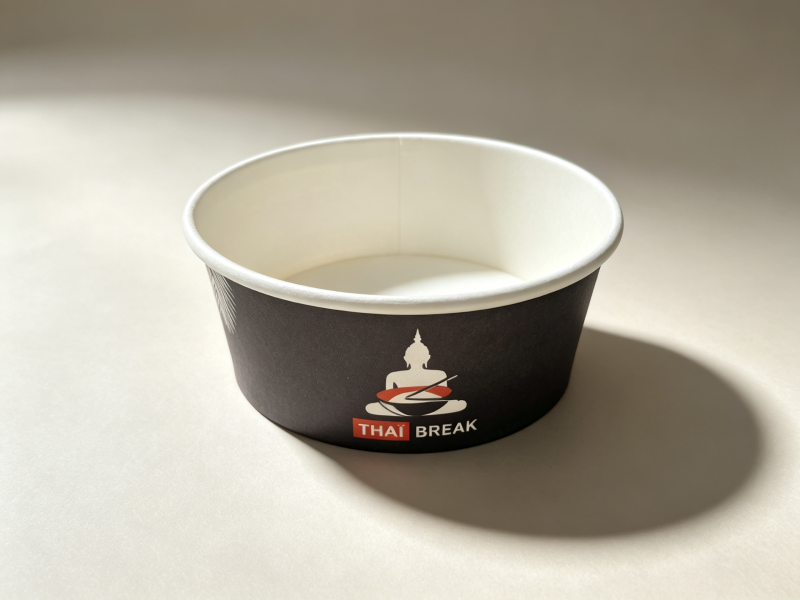
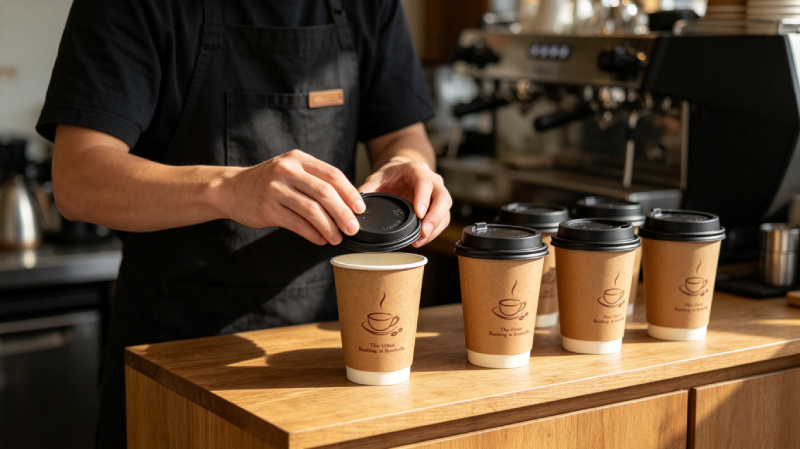
For many restaurants, coffee chains, and food brands, a paper bowl is more than a food container.
It’s part of the brand experience.
Custom printing allows businesses to build stronger brand recognition, but achieving consistent printing quality involves more than simply placing a logo on the bowl.
Below are several factors that buyers often discuss with their paper bowl manufacturer before production begins.
Logo Minimum Line Width
Not every logo can be printed exactly as it appears on a computer screen.
Very thin lines, small text, and intricate patterns may become unclear after printing, especially on kraft paper.
As a general guideline, avoid extremely fine details that may disappear during production.
If your logo contains delicate elements, it’s worth asking your supplier to review the artwork before preparing printing plates.
A small adjustment at the design stage can significantly improve the final result.
Dark Background Designs
Solid black or dark-colored backgrounds can create a premium appearance, but they also require more careful production control.
Large solid color areas tend to reveal scratches, paper fibers, or slight color variations more easily than lighter designs.
Many food brands successfully use dark packaging, but consistent printing and careful handling throughout production become even more important.
Color Consistency
Maintaining consistent colors across multiple production batches is essential for businesses with established branding.
For simple designs, standard CMYK printing is often sufficient.
However, restaurant chains and franchise brands frequently specify Pantone colors to maintain a consistent visual identity across different products and production runs.
If your packaging includes paper bowls, paper cups, takeaway boxes, and paper bags, consistent color matching helps create a unified brand image.
Matte or Gloss Finish?
Surface finish changes how customers perceive the packaging.
Matte Finish
- Natural appearance
- Premium feel
- Popular for kraft packaging
- Soft visual effect
Gloss Finish
- Brighter colors
- Higher contrast
- Smooth surface
- Suitable for colorful branding
Neither option is better.
The choice depends on your brand identity and the image you want customers to associate with your products.
Printing Position Matters
Artwork placement should also be considered during package design.
Logos positioned too close to folded edges, sealing areas, or the bottom of the bowl may appear distorted after forming.
Experienced manufacturers usually recommend a safe printing area that keeps important graphics away from structural folds.
Reviewing a digital layout before production helps avoid unnecessary artwork adjustments later.
Final Thoughts
Disposable paper bowls have evolved far beyond simple takeaway containers.
Today, they play an important role in food presentation, delivery performance, operational efficiency, and brand identity.
For buyers, selecting the right supplier involves more than comparing prices or reviewing samples.
It’s worth understanding how different bowl shapes, materials, lid options, printing methods, and manufacturing processes affect the final product. These details influence not only product quality but also the consistency of future orders.
As many restaurant chains and distributors expand their product lines, working with a manufacturer that offers a complete range of paper food packaging can simplify sourcing, improve branding consistency, and reduce supply chain complexity.
Whether you’re developing a new takeaway packaging program or looking to optimize an existing one, taking the time to evaluate production capabilities—not just quotations—can make a meaningful difference over the long term.