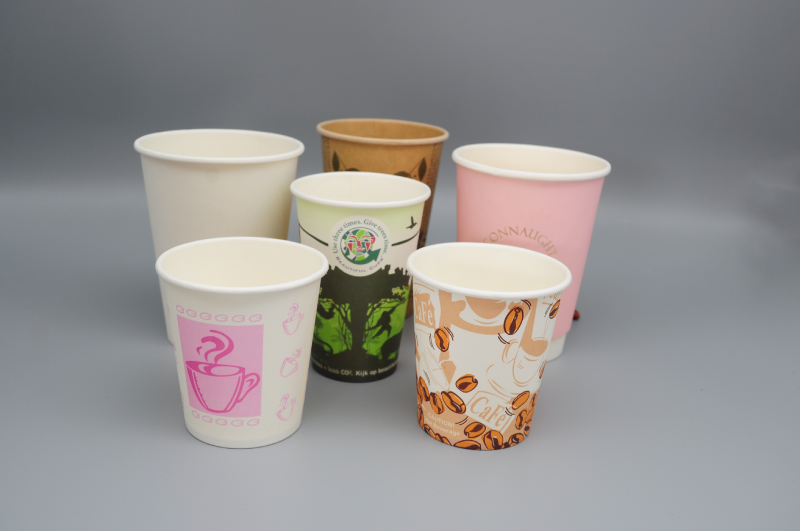
Paper cups are commonly used for hot beverages, but not all paper cups perform the same way under heat.
Some remain stable and comfortable to hold.
Others soften, deform, or fail much faster.
Understanding what makes a paper cup heat-resistant requires looking beyond temperature ratings and focusing on how paper behaves when exposed to heat and moisture at the same time.
Heat Alone Is Not the Real Problem
Paper does not fail simply because it gets hot.
The real challenge begins when heat and liquid act together.
When hot liquid is poured into a paper cup, the temperature rises immediately, but the more critical process is moisture migration. Water starts moving into the paper fibers from the inside surface.
As moisture enters the fibers, the bonds between fibers weaken, and the paper gradually loses strength.
So the question is not whether a paper cup can tolerate heat, but:
How long can the paper maintain its strength while being hot and wet?
This time-based behavior defines heat resistance in paper cups.
Paper Strength Determines the Starting Point
All paper cups lose strength over time when filled with hot liquid.
The difference lies in how much strength the paper has at the beginning.
Paper with well-formed fibers, good bonding, and consistent structure provides a higher initial strength. This allows the cup to remain stable longer before softening becomes noticeable.
Once the fibers absorb enough moisture, even strong paper will eventually weaken. Heat resistance is therefore not permanent — it is a matter of delay, not prevention.
Structure Helps the Cup Hold Its Shape
As the paper softens, the structure of the cup becomes increasingly important.
The cup’s shape distributes internal pressure and external handling forces. A well-designed structure helps the cup remain upright and usable even as the paper loses stiffness.
This is why two cups made from similar paper can behave differently in use. Structure influences how the weakening paper responds under load.
Heat resistance is not only a material property — it is also a structural one.
Coating Controls Moisture Penetration Speed
The inner coating of a paper cup does not make the paper stronger.
Its role is to slow down the rate at which liquid reaches the paper fibers.
By delaying moisture penetration, the coating slows the loss of strength in the paper. This extends the usable time of the cup when holding hot beverages.
Once moisture fully penetrates the fibers, the paper behaves like wet paper regardless of the coating type. Coatings manage timing, not outcomes.
Heat Resistance Is Always Time-Based
No paper cup is heat-proof.
Every hot beverage paper cup operates within a limited time window. During this window, the cup maintains enough strength to function normally. After that, softening and deformation become more likely.
Heat resistance, therefore, is not a fixed temperature limit.
It is the result of how paper quality, structure, and coating interact over time under real use conditions.
Final Understanding
A paper cup is not heat-resistant because of one specific material or feature.
It resists heat because:
- The paper starts with sufficient strength
- The structure supports the paper as it softens
- The coating slows moisture penetration
Together, these factors determine how long a paper cup can reliably hold a hot beverage.
Understanding this principle explains why paper cup performance varies — even when cups appear similar at first glance.
Looking for a Reliable Paper Food Packaging Manufacturer?
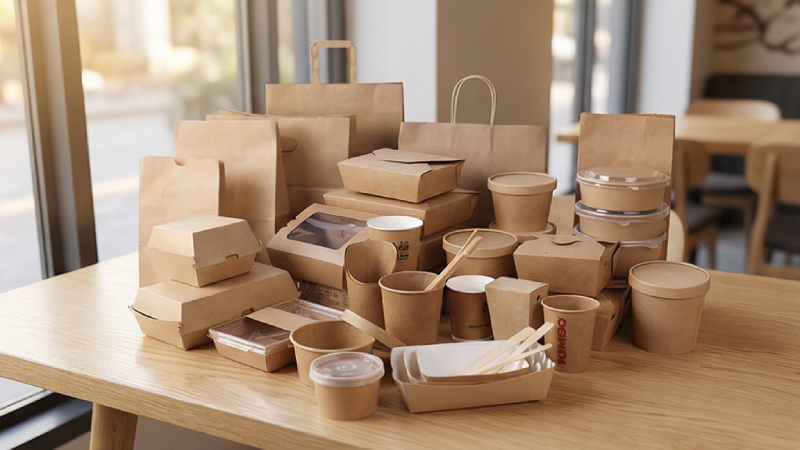
We manufacture high-quality disposable paper cup and food packaging, including paper cups, paper bowls, takeaway boxes, food containers, and paper bags.As a factory with a full production line, we support wholesale custom printing for bulk paper packaging orders.
→ Explore Our Custom Paper Packaging Solutions
→ Contact Us for Samples, Specifications & OEM Support
Let our team help you choose the right paper packaging solution for your product, market, and logistics requirements.